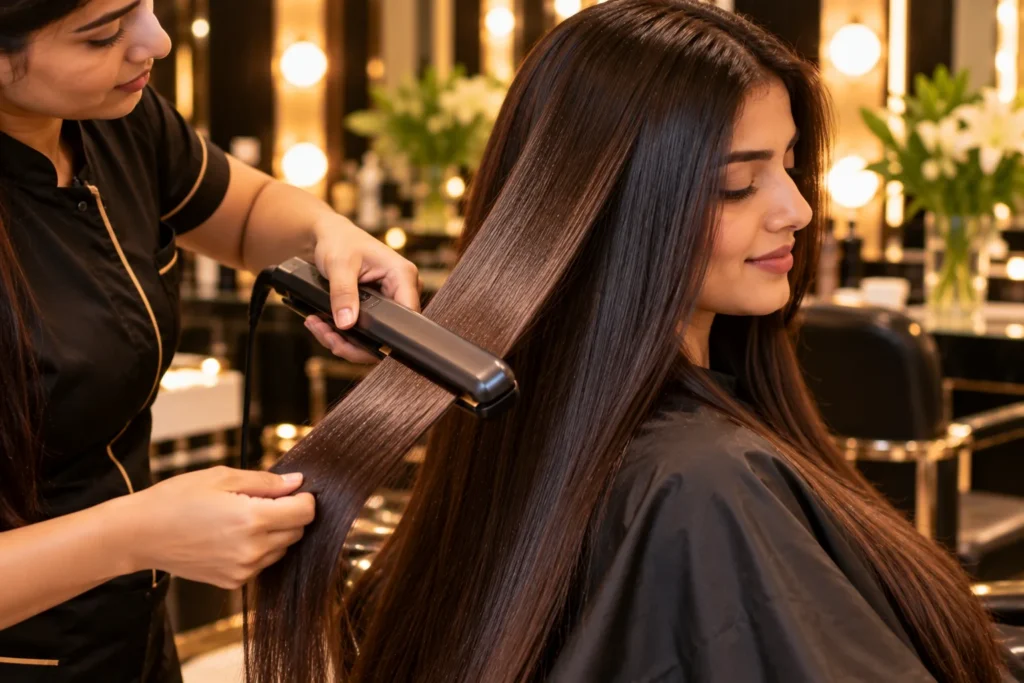
The Ultimate Guide to Hair Straightening Treatment Cost & Care
Introduction
Hair straightening has become a staple in beauty routines worldwide, offering sleek, manageable locks to those blessed with curls and waves. With its rising popularity, understanding the costs and care involved is crucial for making informed decisions.
In this ultimate hair straightening guide, we’ll explore various treatments, their costs, and essential care tips to keep your hair healthy and beautiful.
1. Types of Hair Straightening Treatments and Their Costs
1.1 Chemical Treatments
Chemical treatments, such as Japanese straightening, offer permanent hair straightening solutions. These treatments break down the hair’s natural bonds to achieve a sleek, straight look that lasts until new hair grows.
- Cost Range: $150 to $600, depending on hair length and salon expertise.
- Pros: Long-lasting results.
- Cons: Potential damage if not done correctly.
1.2 Keratin and Brazilian Blowout
Keratin and Brazilian Blowout are semi-permanent treatments that smooth the hair without altering its natural structure. They are popular for reducing frizz and enhancing shine.
- Cost Comparison:
- Keratin: $150 to $400
- Brazilian Blowout: $200 to $500
- Effectiveness: Lasts 3-6 months.
- Longevity: Requires regular touch-ups.
1.3 Thermal Reconditioning
Thermal reconditioning combines chemical treatment with heat to straighten hair permanently. It’s ideal for those seeking long-lasting results.
- Cost Implications: $200 to $800.
- Expected Results: Silky, straight hair.
- Suitable Hair Types: Best for thick, coarse hair.
1.4 At-Home Straightening Kits
For those on a budget, at-home straightening kits offer an affordable alternative. These DIY kits can cost as little as $20-$50.
- Comparison with Salon Treatments:
- Cost: Significantly lower.
- Effectiveness: Less durable and riskier.
- Potential Risks: Damage from improper application.
2. Effectiveness and Longevity of Various Straightening Methods
2.1 Duration of Results
The longevity of ultimate hair straightening results varies based on the method used:
- Chemical Treatments: Permanent until regrowth.
- Keratin/Brazilian Blowout: 3-6 months.
- Thermal Reconditioning: Permanent.
Factors like hair type and aftercare significantly influence duration.
2.2 Hair Type Considerations
Choosing the right ultimate hair straightening treatment depends heavily on your hair type:
- Fine Hair: Opt for keratin treatments to avoid excessive damage.
- Coarse Hair: Chemical or thermal reconditioning may be more effective.
Recommendations should always be tailored to individual hair needs.
3. Post-Treatment Care and Maintenance
3.1 Essential Hair Care Routine
To maintain your ultimate hair straightening results, a proper care routine is crucial:
- Use sulfate-free shampoos and conditioners.
- Incorporate deep conditioning masks weekly.
- Schedule regular trims every 6-8 weeks.
3.2 Avoiding Damage
Preventing damage post-treatment is essential:
- Limit heat styling tools like flat irons.
- Protect your hair from sun exposure by wearing hats or using protective sprays.
3.3 Budgeting for Maintenance
Maintaining your ultimate hair straightening can incur ongoing costs:
- Touch-ups every few months can cost $50-$200.
- High-quality shampoos and conditioners may add up monthly.
Planning for these expenses ensures longevity and health of your treatment results.
4. Risks and Side Effects of Hair Straightening Treatments
4.1 Potential Hair Damage
Common side effects include dryness, breakage, and split ends. Choosing formaldehyde-free products minimizes these risks.
4.2 Health Considerations
Some individuals may experience allergic reactions or scalp irritation from certain chemicals. Conducting patch tests before treatment is advisable.
4.3 Choosing a Reliable Stylist
Finding a skilled stylist enhances safety and results:
- Research reviews and ask for referrals.
- Ensure a professional consultation before any treatment.
5. Salon Treatments vs. At-Home Kits
5.1 Pros and Cons of Salon Treatments
Salon treatments provide professional expertise:
- Pros: High-quality results, safer application.
- Cons: Higher costs, longer appointment times.
5.2 At-Home Kits: Benefits and Drawbacks
At-home kits are budget-friendly but come with risks:
- Benefits: Cost-effective, convenient.
- Drawbacks: Risk of improper application leading to damage.
FAQ Section
What is the safest hair straightening treatment?
Keratin treatments are often considered safest due to their less harsh chemicals.
How often should I get my hair straightened?
Every few months for touch-ups or as needed based on growth rate.
Can I straighten my hair if it’s already colored or treated?
Yes, but consult with a stylist to ensure compatibility and minimize damage.
What are the signs that a straightening treatment is damaging my hair?
Look for excessive dryness or breakage as signs of damage.
How do I know which treatment is best for my hair type?
Consult with a professional stylist for personalized recommendations based on your hair type.
Conclusion
In summary, understanding the costs, care routines, and risks associated with ultimate hair straightening can significantly impact your decision-making process. By tailoring choices to your individual needs and budget, you can achieve beautiful, long-lasting results without compromising on health or quality.
Call to Action
We invite you to share your experiences with ultimate hair straightening treatments in the comments below! For personalized advice, consider consulting with a professional stylist. Don’t forget to subscribe to our blog for updates on the latest in hair care trends and tips!